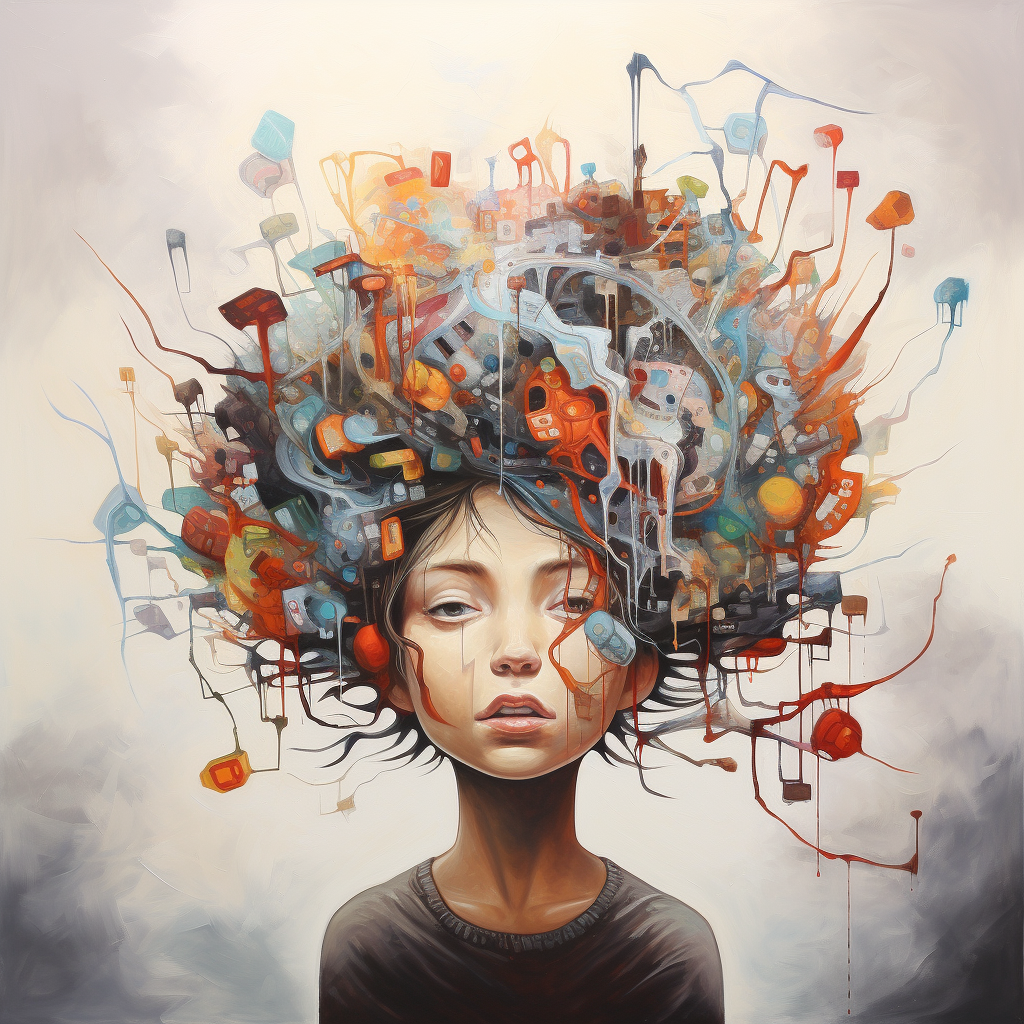
The Gut Feeling and the Delusion of Normalcy
From my earliest memories, a persistent feeling clung to me: something was amiss. This wasn’t a definable emotion but rather an intangible sense that my life’s experiences didn’t align with what I believed they should be. Scanning through my old diaries and notes, I found the scribbles of a younger self seeking answers. Moments where I felt aligned with life and the world around me were sporadic, outnumbered by the overwhelming feeling of disconnection, of not truly knowing oneself.
Growing up in Finland, ADHD was not a topic of everyday conversation. It wasn’t discussed in my childhood, teenage years, or even into adulthood. The general understanding was limited to the stereotypical hyperactive children who ”misbehaved.” As I revisited a note from my 2nd-grade teacher, it read, “Vivid imagination, creative, but lacks concentration.” How telling and yet how overlooked.
Perhaps the most significant hindrance to early diagnosis was what I term the ”delusion of being normal.” Our society encourages us to believe we fit a certain mold, even though it never precisely defines what ”normal” is. It’s like playing a game where everyone else knows the rules, and you’re left guessing. I yearned to belong, to feel ’right,’ but always felt misaligned.
While ADHD is not a disease, there exists a mental barrier—one of reluctance to accept that something might be ’different’ about oneself. My journey to self-awareness began unexpectedly through a friend. Diagnosed with ADHD at 40, his life narrative mirrored mine with uncanny precision. His story planted a seed that began to grow, driving me to explore ADHD through memes, articles, and personal accounts. The more I delved into it, the clearer it became: this was my story too. Yet, it still took me two more years to finally seek a specialist.
Understanding ADHD:
A Kaleidoscope of Emotions and Perceptions
To many, ADHD might seem like a mere acronym, but for those like me, it’s a myriad of emotions, sensations, and challenges that are experienced daily. Imagine a world where excitement comes easily, but its counterpart, concentration, often eludes you. Imagine having your intentions misunderstood constantly—like leaving a dish on a table, thinking you’ll return to it shortly, only to be sidetracked by another urgent task.
ADHD feels like a constant inner dialogue that reminds you of your perceived inadequacies. It whispers criticisms, contrasting what others seemingly do with ease against your own struggles with seemingly basic tasks.
Yet, it’s not all challenges. ADHD drives you to give everything your all, to throw yourself into projects and passions with 150% enthusiasm. But then, as soon as the novelty wears off and things start to feel routine, disillusionment sets in. It’s a relentless pursuit of pleasure, joy, and that ever-elusive dopamine hit to keep the brain engaged and motivated.
But what are the tangible signs of ADHD? It’s in the fidgeting, the shortened attention spans during long conversations, and in forgotten birthdays. It’s in the difficulty of uttering a simple ”I’m sorry” and the defensive mechanism of withdrawing to prevent getting hurt. The daily mask worn to fit in becomes heavy, with tears shed behind it from the weight of inauthenticity.
On the brighter side, ADHD brings about a boundless creativity. There’s no proverbial box for us; we live and think beyond it. It translates to deep, meaningful conversations and an unparalleled creative flair, which I channel into my work and music.
Yet, there’s a shadow: ”out of sight, out of mind.” Relationships sometimes falter because of this unintentional neglect.
Misconceptions about ADHD abound. Some dismiss it as just a modern trend, a convenient label. But it’s neither a trend nor an excuse. It’s not about being merely restless; it’s about being perpetually understimulated. We’re akin to sharks—always moving, lest we sink. Despite what some might believe, ADHD isn’t an overdiagnosed fad. If anything, it remains underdiagnosed and misunderstood in the broader society.
Symptoms and Realizations:
A Shifting Landscape of Identity
Over the years, the signs and symptoms of my ADHD have transformed, evolving in their manifestations. One memory, clear as day, stands out from my teenage years. At around 14-15, I found peace in multi-tasking: engrossed in a computer game while simultaneously watching James Cameron’s ”Aliens”, listening to music, and grabbing my guitar during game load times. For an entire day, I repeated this pattern, feeling a rare sense of contentment and alignment.
But such moments were fleeting. The most pervasive symptom was a sense of non-belonging. While I became adept at blending in, mirroring the moods and vibes of various groups, I never felt rooted. It was in the world of synthwave music that I finally felt a kinship, a place where my unique rhythm found its matching beat. Astonishingly, a significant number of my peers in this community shared similar neurodivergent traits, further solidifying the idea that perhaps, here, I had found my tribe.
Life, however, wasn’t without its dark patches. From struggling with alcohol to frequently changing jobs or outgrowing interests and friends, ADHD’s footprints were everywhere. A particularly challenging symptom is rejection-sensitive dysphoria (RSD). This emotional response magnifies perceived slights, causing days of mood shifts over seemingly insignificant incidents.
Medication was a turning point for me. The constant noise in my head, the incessant loops of regrets, reminders, and overthinking, gradually quieted down. Sleep, once a nightly battle due to an overactive mind, became more accessible.
However, initiative remains a double-edged sword. Passionate pursuits like gaming, music-making, or innovating ignite an unquenchable fire within me, driving me to give my best. Yet, mundane tasks, like household chores, ironically become mountains, leading me to procrastinate in the most unexpected ways—like decluttering a hard drive instead of vacuuming.
Coping and Adapting:
Behind the Masks and Walls
Growing up with undiagnosed ADHD, a consistent theme was my attempt to mask perceived inadequacies. The fear of appearing ’dumb’, especially when information just wouldn’t stick, pushed me to develop coping mechanisms early on. The educational landscape of the ’90s offered little sympathy, with mistakes often met with mockery, not mentoring. This bred a need to shield myself from criticism and embarrassment.
Humor and music became my armor. They granted me an identity that masked my challenges, allowing me to navigate various social landscapes. This chameleon-like behavior was both a blessing and a curse. While it made blending in effortless, it also attracted toxic relationships that exploited my good-natured tendencies.
Embracing a ”never surrender” ethos meant constantly pushing beyond my limits. While this showcased my resilience, it also resulted in numerous ”close by” burnouts. The constant fear of being exposed as an imposter in professional environments, doubting my competence, further fueled my overexertion.
Ironically, to protect myself from the world’s cruelty, I constructed emotional walls so high that, at one point, I became trapped within, detached from genuine emotions. This state of emotional numbness, while seeming like stoicism, was really an evasion of my true self.
Post-diagnosis, the journey has been one of rediscovery. With the newfound knowledge of my ADHD, I’ve grown kinder to myself, learning the power of ’no’ and setting boundaries. But this path isn’t without its challenges. Every step of self-discovery is like peeling an onion layer, invoking tears and deep introspection. As these layers, built over years of masking and coping, shed away, the looming question remains: Beyond all these adaptations, who truly am I?
The Road Ahead: Embracing Acceptance and Raising Awareness
My journey towards seeking an ADHD diagnosis was driven by three core aspirations:
- Self-awareness: I wanted to understand the underlying reasons for my actions and behaviors. An official diagnosis illuminated the ’why’ behind many aspects of my life.
- Protecting the Next Generation: Knowing ADHD has genetic components, I wanted to ensure I’m well-equipped to support my children if they inherit it.
- Living, Not Just Surviving: The next 40 years shouldn’t be about merely making it through the day. I yearn for a life of purpose, peace, and genuine enjoyment.
For those on the fence about seeking an ADHD diagnosis, my advice is clear: Embark on this journey. Yes, it will challenge you — confronting past traumas and dismantling years of coping mechanisms won’t be a walk in the park. Life may even seem rawer and more painful as you shed these protective layers. However, with diagnosis comes the invaluable gift of self-compassion. Medications can eliminate many day-to-day challenges, making routines and responsibilities more manageable. Furthermore, an understanding backed by scientific research equips you to better communicate and relate to others, fostering healthier relationships.
But our advocacy shouldn’t stop at individual experiences. ADHD Awareness Month and broader discussions on neurodiversity play a pivotal role in shaping the narrative. We’re just scratching the surface in understanding the full spectrum of neurodiversity, especially in educational and professional environments. Every shared experience, every story told, chips away at pre-existing biases. It’s essential to realize that diversity isn’t just skin deep; it’s intricately woven into the very fabric of our minds.
Life with ADHD
Life with ADHD, especially when diagnosed later in life, is a journey of unearthing the layers of oneself. It’s about reconciling with the past, understanding the present, and charting a course for a future built on self-awareness and acceptance. While my experiences might echo with many, every individual’s journey with ADHD is unique. And each story adds depth to our collective understanding of neurodiversity.
As ADHD Awareness Month unfolds, let’s remember that the objective is not just to raise awareness but also to foster acceptance. Our collective stories challenge stereotypes, educate communities, and inspire individuals to seek the understanding they may have yearned for. In a world striving for diversity and inclusivity, understanding and accepting the neurodiverse spectrum is the next frontier.
And together, we’re pushing the boundaries.
#adhd
 WhatheFalck
Jätä kommentti